
Technical Overview to Rental Transparent LED Screens for Stage Construction
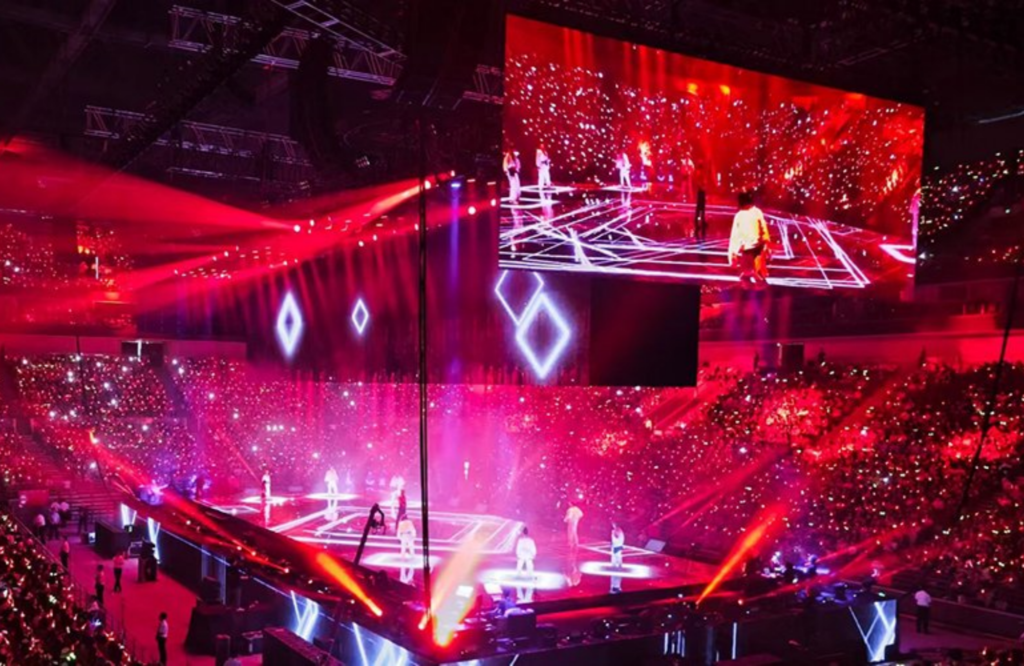
Transparent LED screens have become essential elements in modern stage design, enabling performers to be visible through dynamic visual backdrops while maintaining sightlines for lighting and audience connection. For rental applications, these systems must balance optical performance with rapid deployment mechanics and outdoor durability—technical requirements that demand precise engineering rather than marketing specifications.
This guide provides production technicians and rental inventory managers with objective criteria for selecting transparent LED products for stage construction, focusing on mechanical design, weatherproofing, and assembly efficiency.
Technical Advantages of Transparent LED for Stage Rental
Transparent LED technology offers specific benefits for temporary stage installations:
1. Sightline Preservation
70-90% transparency allows lighting beams, pyrotechnics, and performer movement to remain visible through the screen, enabling layered visual effects impossible with solid LED walls.
70-90% transparency allows lighting beams, pyrotechnics, and performer movement to remain visible through the screen, enabling layered visual effects impossible with solid LED walls.
2. Lightweight Portability
At 7-12kg/m², transparent panels reduce truck weight by 40% compared to conventional rental cabinets, directly impacting transportation costs and crew handling safety.
At 7-12kg/m², transparent panels reduce truck weight by 40% compared to conventional rental cabinets, directly impacting transportation costs and crew handling safety.
3. Frame-Integrated Installation
Unlike direct-glass mounting, stage applications use truss-compatible frames with standard rigging points, enabling 30-minute setup times for 10m² arrays.
Unlike direct-glass mounting, stage applications use truss-compatible frames with standard rigging points, enabling 30-minute setup times for 10m² arrays.
Pixel Pitch Engineering for Stage Viewing Distances
P3.91×7.8 – Mid-Stage Close-View Applications
Optical Specifications:
- Minimum Viewing Distance: 4 meters (audience pit), 8 meters (FOH camera)
- Resolution: 128×256 pixels per 500×1000mm panel
- Transparency: 75%
Technical Applications:
- Primary stage backdrops for 3,000-10,000 capacity venues
- DJ booth side screens where camera proximity is 5-8 meters
- Live IMAG for mid-stage camera positions
Engineering Note: Provides 4K horizontal resolution at 15m screen width—sufficient for broadcast camera close-ups without pixelation.
P7.8×7.8 – Large-Scale Stage Backdrops
Optical Specifications:
- Minimum Viewing Distance: 8 meters (audience), 15 meters (wide-shot camera)
- Resolution: 64×64 pixels per 500×500mm panel
- Transparency: 85%
Technical Applications:
- Main stage backdrops for 10,000-30,000 capacity outdoor stages
- Perimeter delay screens
- Overhead ceiling visual arrays
Engineering Note: Square pixel geometry simplifies content mapping for creative LED ceiling installations and curved stage designs.
P10.4×10.4 – Mega-Stage Atmospheric Effects
Optical Specifications:
- Minimum Viewing Distance: 12 meters
- Resolution: 48×48 pixels per 500×500mm panel
- Transparency: 90%
Technical Applications:
- Far-distance main stages (>50m audience depth)
- Side-stage visual wings
- Stage floor integration (with protective polycarbonate)
Engineering Note: 90% transparency ensures performer visibility through floor-mounted panels for unique upward-shot camera angles.
Brightness Engineering for Outdoor Stage Conditions
Daylight Performance Requirements
Outdoor Stage Formula:
Required nits = Ambient lux × 0.018
Example: 30,000 lux × 0.018 = 540 nits reflected
Accounting for transparency loss: 4,500 nits minimum LED brightness
Required nits = Ambient lux × 0.018
Example: 30,000 lux × 0.018 = 540 nits reflected
Accounting for transparency loss: 4,500 nits minimum LED brightness
Stage-Specific Considerations:
- Sun Position: Specify 5,500 nits for stages facing east/west (direct sun)
- Cloud Cover: 4,000 nits sufficient for north-facing stages or heavy cloud regions
- Stage Lighting: Anti-reflective masks reduce glare from follow spots (specify AR coating)
Nighttime Performance Optimization
Recommended Range: 800-1,200 nits
Dimming Control: 0-100% linear, with 5% increments for smooth fade-to-black transitions
Color Temperature: Adjustable 3200K-9300K to match stage lighting gel colors
Dimming Control: 0-100% linear, with 5% increments for smooth fade-to-black transitions
Color Temperature: Adjustable 3200K-9300K to match stage lighting gel colors
Weatherproofing Engineering for Outdoor Rental
IP Rating Minimum Specifications
IP65 (IEC 60529):
- 6: Dust-tight (no particle ingress)
- 5: Protected against water jets from any direction (6.3mm nozzle, 12.5L/min)
IP66 Upgrade:
- 6: Protected against powerful water jets (12.5mm nozzle, 100L/min)
- Use Case: Coastal festivals with saltwater spray exposure
Connector Requirements:
- Power: True1 IP67 locking connectors
- Data: EtherCon ruggedized CAT6 with sealing glands
- Test Protocol: Pressure washer test at 100bar for 3 minutes before each rental deployment
Environmental Stress Factors
Temperature Fluctuation:
- Operating Range: -20°C to +60°C (verified with thermocouple testing)
- Thermal Shock: Panels must withstand 30°C temperature change within 1 hour without seal failure
UV Degradation:
- LED Encapsulation: UV-resistant epoxy (tested to ASTM G154, 1000 hours)
- Cabinet Coating: Powder coat with 50+ micron thickness, UV inhibitor additives
- Cable Jacket: TPE material rated for outdoor UV exposure
Humidity & Condensation:
- Internal Dehumidifier: Silica gel packs in each cabinet (replace every 30 rental days)
- Breather Valves: GORE-TEX vent prevents pressure differential while blocking moisture
- Connector Grease: Dielectric grease on all contacts prevents corrosion
Mechanical Assembly Systems for Rapid Deployment
Quick-Lock Frame Specifications
Lock Type: Spring-loaded cam-lock with 45° engagement
- Engagement Force: 15N per lock (one-handed operation)
- Retention Force: 500N shear load per lock point
- Cycle Rating: 500 assemblies minimum before lock replacement
- Material: 316 stainless steel (corrosion-resistant for outdoor use)
Panel Alignment System:
- Precision Pins: 8mm diameter, H7 tolerance for <0.5mm panel-to-panel gap
- Magnetic Assist: 5kg pull-force magnets guide panels into alignment before lock engagement
- Visual Indicators: Red/Green lock status LED on each panel (visible from ground)
Rigging Point Engineering
Standard Rigging:
- Point Load: 250kg per hanging point (4 points per 500×1000mm panel)
- Safety Factor: 5:1 (1,250kg breaking strength minimum)
- Compatibility: Accepts standard shackles, spigots, and half-couplers
- Design: Fold-down rigging ears to reduce shipping volume
Ground Support Frame:
- Material: 40×40×2mm aluminum truss sections
- Base Plates: 400×400mm steel with rubber isolation pads (protects stage deck)
- Height Adjustment: 100-300mm per leg via threaded risers
Common Technical Mistakes in Stage Transparent LED Deployment
Mistake 1: Insufficient Brightness for Daylight Gigs
Error: Using 2,000 nit indoor panels for noon performances
Result: Content invisible on camera and to audience
Solution: Specify minimum 4,500 nits for any outdoor stage application
Result: Content invisible on camera and to audience
Solution: Specify minimum 4,500 nits for any outdoor stage application
Mistake 2: Undersized Power Distribution
Error: Single 20A circuit for 15m² screen
Result: Voltage drop to 4.5V causes color shift and flicker
Solution: Calculate: 250W/m² × area = total watts; provide 208V/30A circuit per 20m²
Result: Voltage drop to 4.5V causes color shift and flicker
Solution: Calculate: 250W/m² × area = total watts; provide 208V/30A circuit per 20m²
Mistake 3: Frame Flex Under Wind Load
Error: Using lightweight 40mm truss for 8m high screen in outdoor venue
Result: Visible panel misalignment, structural failure risk
Solution: Specify 52mm truss for heights >6m; guy-wire support above 10m
Result: Visible panel misalignment, structural failure risk
Solution: Specify 52mm truss for heights >6m; guy-wire support above 10m
Mistake 4: Ignoring Transparency Loss with Camera Filters
Error: Not testing with ND filters on broadcast cameras
Result: Transparent effect disappears on livestream (camera sees LED structure)
Solution: Test with cameras at actual shoot settings (typically ND 0.6-1.2)
Result: Transparent effect disappears on livestream (camera sees LED structure)
Solution: Test with cameras at actual shoot settings (typically ND 0.6-1.2)
Mistake 5: Connector Contamination
Error: Connecting outdoor-rated panels with dirty connectors
Result: Intermittent signal loss, color shift in random panels
Solution: Clean with isopropyl alcohol before each connection; apply dielectric grease
Result: Intermittent signal loss, color shift in random panels
Solution: Clean with isopropyl alcohol before each connection; apply dielectric grease
Product Selection Framework by Stage Scale
Small Stage (3,000-8,000 capacity, indoor/outdoor)
Recommended Product: P3.91×7.8, 4,500 nits, 500×1000mm panels
Technical Rationale:
Technical Rationale:
- 4-8 meter viewing distance typical for small-mid stages
- 4,500 nits adequate for evening performances and overcast daytime
- 500×1000mm size balances handling weight (11kg) with setup speed
Medium Stage (10,000-25,000 capacity, outdoor focus)
Recommended Product: P7.8×7.8, 5,500 nits, 500×500mm panels
Technical Rationale:
Technical Rationale:
- 8-15 meter viewing distance covers pit to FOH
- Square panels simplify curved stage designs (±15° per panel)
- 5,500 nits ensures visibility in direct afternoon sun
Large Stage/Multi-Stage Festival (30,000+ capacity)
Recommended Product: Hybrid P7.8/P10.4, 5,500 nits, mixed panel sizes
Technical Rationale:
Technical Rationale:
- P7.8 for lower screen section (<6m height), P10.4 for upper section
- Reduces processor load by 30% while maintaining visual consistency
- Common frame system accommodates both pitches seamlessly
Product Quality Assessment Protocols for Rental Inventory
Assembly Cycle Test
Method:
- Assemble/disassemble single panel 100 cycles
- Measure lock engagement force after each 20 cycles
- Acceptance: Force variation <10%; no lock deformation
Waterproof Verification Test
Method:
- Assemble 4-panel array
- Subject to pressure washer at 100bar for 5 minutes
- Acceptance: No water ingress; IP65 rating maintained
Transparency Degradation Test
Method:
- Measure transparency at 0 hours and 500 operating hours
- Acceptance: <2% transparency loss (indicates UV stability)
Rigging Point Fatigue Test
Method:
- Apply 250kg static load to rigging point for 24 hours
- Acceptance: <0.5mm permanent deformation; no weld cracking
Pre-Event Technical Checklist (7 Days)
Inventory Preparation:
☐ Panel count verified against order (+10% spares)
☐ Locks cycled and lubricated (silicone spray)
☐ Connector pins cleaned with DeoxIT contact cleaner
☐ Rigging points inspected for cracks (dye penetrant test)
☐ Power supplies load-tested at 110% rated current
☐ Panel count verified against order (+10% spares)
☐ Locks cycled and lubricated (silicone spray)
☐ Connector pins cleaned with DeoxIT contact cleaner
☐ Rigging points inspected for cracks (dye penetrant test)
☐ Power supplies load-tested at 110% rated current
Logistical Planning:
☐ Frame dimensions verified against stage plot CAD
☐ Truss weight capacity confirmed with stage engineer
☐ Generator capacity calculated: 250W/m² × screen area + 25% safety
☐ Signal path mapped: fiber extenders ordered for runs >30m
☐ Weather contingency: pop-up tents for power supply protection
☐ Frame dimensions verified against stage plot CAD
☐ Truss weight capacity confirmed with stage engineer
☐ Generator capacity calculated: 250W/m² × screen area + 25% safety
☐ Signal path mapped: fiber extenders ordered for runs >30m
☐ Weather contingency: pop-up tents for power supply protection
Content & Control:
☐ Processor configured for total pixel count
☐ Backup media player loaded with static content
☐ Intercom channel assigned for screen tech crew
☐ Spare module programming: R, G, B, W balance calibrated before event
☐ Processor configured for total pixel count
☐ Backup media player loaded with static content
☐ Intercom channel assigned for screen tech crew
☐ Spare module programming: R, G, B, W balance calibrated before event