
Technical Overview to Fixed Installation SMD LED Screens for Multi-Function Halls
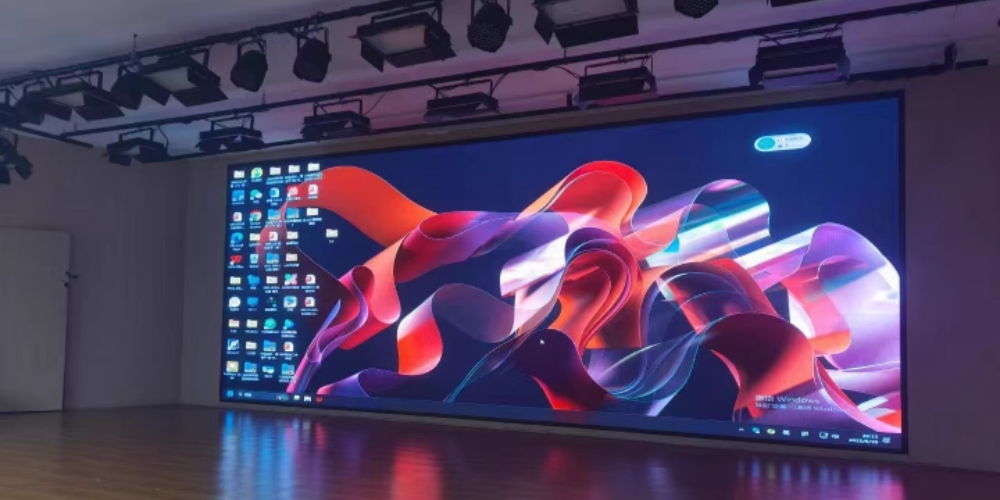
Multi-function halls require display systems capable of supporting presentations, video conferencing, live camera feeds, and broadcast-quality content within a single venue. Fixed-installation SMD (Surface-Mount Device) LED screens have become the preferred solution due to their fine pixel pitch, high refresh rates, and modular scalability—technical capabilities that exceed traditional projection or LCD video wall systems.
This guide provides AV consultants, system integrators, and facility managers with objective criteria for specifying SMD-based LED displays for multi-function hall applications, focusing on optical performance, mechanical integration, and long-term reliability.
Technical Advantages of SMD LED in Multi-Function Venues
1. Fine-Pitch Uniformity
SMD packages allow pixel pitches down to 1.25 mm while maintaining ±0.05 mm chip placement accuracy, enabling 4K resolution at 2.5 m viewing distance—critical for front-row spectators in lecture mode.
SMD packages allow pixel pitches down to 1.25 mm while maintaining ±0.05 mm chip placement accuracy, enabling 4K resolution at 2.5 m viewing distance—critical for front-row spectators in lecture mode.
2. High Refresh Rate Capability
SMD driver ICs achieve 3840 Hz refresh without brightness penalty, eliminating flicker on broadcast cameras and smartphone recordings—mandatory for hybrid events.
SMD driver ICs achieve 3840 Hz refresh without brightness penalty, eliminating flicker on broadcast cameras and smartphone recordings—mandatory for hybrid events.
3. Modular Scalability
640×480 mm cabinets tile seamlessly to create 16:9, 21:9, or custom aspect ratios without bezels, adapting to varying hall geometries.
640×480 mm cabinets tile seamlessly to create 16:9, 21:9, or custom aspect ratios without bezels, adapting to varying hall geometries.
Pixel-Pitch Engineering for Multi-Function Viewing Distances
P3 (2.5-3.0 mm) – General Presentation Mode
Optical Parameters
- Minimum viewing distance: 2.5 m
- Optimal seating: 3–8 m from screen
- Resolution: 213×160 pixels per 640×480 mm cabinet
Application Matrix
- Town-hall meetings with 100–300 seats
- University lecture halls
- Corporate training rooms (tiered seating)
Engineering Note
P3 delivers 1920×1080 pixels on 4.8 m × 2.7 m wall—cost-effective for rooms where front-row viewers sit ≥3 m away.
P3 delivers 1920×1080 pixels on 4.8 m × 2.7 m wall—cost-effective for rooms where front-row viewers sit ≥3 m away.
P2.5 (2.0-2.5 mm) – Hybrid Event Mode
Optical Parameters
- Minimum viewing distance: 2 m
- Optimal seating: 2–6 m from screen
- Resolution: 256×192 pixels per 640×480 mm cabinet
Application Matrix
- Hotel ballrooms with live camera IMAG
- Courtroom evidence display
- Medical symposium with HD surgical feed
Engineering Note
At 2 m pitch, 3 m × 1.7 m screen yields 1440×810 px—sufficient for 1080p source without down-scaling.
At 2 m pitch, 3 m × 1.7 m screen yields 1440×810 px—sufficient for 1080p source without down-scaling.
P1.86 (1.5-1.86 mm) – Broadcast-Quality Mode
Optical Parameters
- Minimum viewing distance: 1.5 m
- Optimal seating: 1.5–4 m from screen
- Resolution: 344×258 pixels per 640×480 mm cabinet
Application Matrix
- International conference centers
- TV studio audience walls
- High-end boardrooms with 4K sources
Engineering Note
1.86 mm provides 4K horizontal resolution at 6 m width—meets SMPTE ST 2082-1 4K/60Hz camera requirements.
1.86 mm provides 4K horizontal resolution at 6 m width—meets SMPTE ST 2082-1 4K/60Hz camera requirements.
Brightness & Contrast Engineering for Multi-Function Lighting
Uniform Illuminance Formula
Target Luminance = Room Ambient Lux × 0.12 / Screen Gain
Example
- Room ambient: 500 lux (typical hall with LED house lights)
- Screen gain: 1.0 (matte SMD surface)
- Target Luminance: 60 cd/m² reflected → 500 nits LED output
Engineering Range
- Low ambient (200 lux): 300 nits LED sufficient
- High ambient (1,000 lux): 1,000 nits LED required
Auto-Dimming Sensor
- Photocell facing audience area
- 0–100% linear dimming in 256 steps
- <2 s response time to prevent visible jumps
Contrast Ratio Maintenance
Native Contrast: 4,000:1 (SMD black package + black mask)
Ambient Contrast: >50:1 at 500 lux room lighting
Measurement Method: IEC 62341-5-2, 45° angle
Ambient Contrast: >50:1 at 500 lux room lighting
Measurement Method: IEC 62341-5-2, 45° angle
SMD Package & Driver IC Technology
SMD LED Package Specifications
Standard Package (for P2.5-P3):
- Size: 2121 metric (2.1×2.1 mm)
- Chip Layout: 3-in-1 RGB vertical stack
- Pad Pitch: 0.95 mm (enables 2.5 mm pixel pitch)
- Contrast: Black package base, matte epoxy surface
Fine-Pitch Package (for P1.86):
- Size: 1515 metric (1.5×1.5 mm)
- Pad Pitch: 0.65 mm (enables 1.86 mm pitch)
- Tolerance: ±0.03 mm placement accuracy (required for <2 mm pitch)
Thermal Design:
- Junction-to-case thermal resistance: <15 °C/W
- Maximum junction temperature: 105 °C (verified via thermocouple)
Driver IC Performance
Refresh Rate: 3840 Hz @ 14-bit grayscale (no brightness penalty)
Scan Mode: 1/32 scan for P2.5, 1/48 scan for P1.86 (maintains brightness)
EMI Compliance: Meets CISPR 32 Class A (broadcast environment requirement)
Power Efficiency: 3.3V operation, 90% driver efficiency at 1kHz PWM
Scan Mode: 1/32 scan for P2.5, 1/48 scan for P1.86 (maintains brightness)
EMI Compliance: Meets CISPR 32 Class A (broadcast environment requirement)
Power Efficiency: 3.3V operation, 90% driver efficiency at 1kHz PWM
Mechanical Cabinet Design for Permanent Installation
Cabinet Precision Specifications
Dimensional Tolerance:
- Panel flatness: <0.1 mm across 640×480 mm diagonal
- Pixel-to-pixel alignment: <0.05 mm (verified with CMM)
- Seam gap: <0.3 mm (no visible lines at 2 m viewing)
Material & Weight:
- Die-cast aluminum, 2.5 mm wall thickness
- Weight: 6.8 kg per 640×480 mm panel (P2.5)
- Mounting depth: 65 mm (fits within 100 mm wall build-up)
Front-Service Architecture
Maintenance Access:
- Magnetic modules remove with suction tool
- Driver board accessible from front (no rear access required)
- Power supply: slide-out tray, hot-swappable
Safety Features:
- Locking tabs prevent accidental module removal
- Grounding spring ensures ESD protection during service
- Temperature sensor on each module (overheat alarm at 80 °C)
Signal & Control Architecture
Video Path Requirements
Input Formats Supported:
- HDMI 2.0: 4K@60Hz (4:4:4)
- DisplayPort 1.2: 4K@60Hz
- 12G-SDI: 4K@60Hz (broadcast standard)
Processing Chain:
Source → 4K Processor → Fiber → Receiver Card → Panels
Latency: <1 frame (16.7ms @ 60Hz) — imperceptible to audience
Source → 4K Processor → Fiber → Receiver Card → Panels
Latency: <1 frame (16.7ms @ 60Hz) — imperceptible to audience
Multi-Source Management
Seamless Switching: <100ms between HDMI/DP/SDI inputs
Picture-in-Picture: Up to 4 simultaneous sources (resizeable windows)
Scaling: 4K input down-scaled to native panel resolution without interpolation artifacts
Picture-in-Picture: Up to 4 simultaneous sources (resizeable windows)
Scaling: 4K input down-scaled to native panel resolution without interpolation artifacts
Network Control
Wired Control: Gigabit Ethernet, VLAN isolation
Wireless Backup: 5GHz Wi-Fi for emergency control (not primary)
Protocol: Art-Net or sACN for lighting console integration
Wireless Backup: 5GHz Wi-Fi for emergency control (not primary)
Protocol: Art-Net or sACN for lighting console integration
Thermal Management for 24/7 Operation
Heat Dissipation Design
Natural Convection (P3-P2.5):
- Finned aluminum back cover
- 10mm air gap between modules
- Sufficient for <500 nits operation
Forced Air (P1.86 high-brightness):
- 40mm silent fans (20dB) every 600mm
- Thermostatic control: fans activate >45°C
- Filter media: washable, MERV 8 rating
Temperature Monitoring
Sensor Placement: One per 0.5m² screen area
Alarm Thresholds:
Alarm Thresholds:
- 70 °C: Yellow warning (brightness reduction)
- 80 °C: Red alarm (operator notification)
- 90 °C: Auto-shutdown (protection mode)
Acoustic Considerations for Multi-Function Venues
Fan Noise Specifications
Silent Mode (<500 nits): <25 dB(A) at 1m (natural convection)
Standard Mode (500-1000 nits): <35 dB(A) at 1m (low-speed fans)
High-Brightness Mode (>1000 nits): <45 dB(A) at 1m (acceptable for speech events)
Standard Mode (500-1000 nits): <35 dB(A) at 1m (low-speed fans)
High-Brightness Mode (>1000 nits): <45 dB(A) at 1m (acceptable for speech events)
Measurement Method: IEC 60704-1, background noise <20 dB(A)**
Vibration Isolation
Fan Mounting: Rubber isolators prevent structure-borne noise transmission
Cabinet Mounting: Optional viscoelastic pads for wall-mounted installations
Result: No perceptible vibration on adjacent walls
Cabinet Mounting: Optional viscoelastic pads for wall-mounted installations
Result: No perceptible vibration on adjacent walls
Power System Design
Electrical Load Calculation
P2.5 Typical Load: 200W/m² (average), 400W/m² (peak white)
P1.86 Typical Load: 250W/m² (average), 500W/m² (peak white)
P1.86 Typical Load: 250W/m² (average), 500W/m² (peak white)
Example: 6.4 m × 2.88 m P2.5 wall (18.4 m²)
- Average: 3,680 W
- Peak: 7,360 W
- Circuit Recommendation: 208V / 30A per 18 m² (provides 25 % headroom)**
Power Supply Specifications
Efficiency: 92% at 50% load (80 PLUS Platinum equivalent)
Power Factor: >0.95 (reduces reactive power charges)
Harmonics: <5% THD (meets IEEE 519 requirements)
Power Factor: >0.95 (reduces reactive power charges)
Harmonics: <5% THD (meets IEEE 519 requirements)
Backup Power Interface
Automatic Transfer: <10ms switchover to UPS
Battery Support: 2kWh per 10m² for 1 hour at 300 nits (emergency mode)
Generator Compatible: Accepts 208V three-phase, frequency 50/60Hz ±0.1%
Battery Support: 2kWh per 10m² for 1 hour at 300 nits (emergency mode)
Generator Compatible: Accepts 208V three-phase, frequency 50/60Hz ±0.1%
Quality Assessment & Testing Protocols
Optical Performance Tests
Brightness Uniformity (9-Point Method):
- Acceptance: ≥95% (max-min)/max × 100%
- Measurement: Calibrated luminance meter, 45° angle
Color Accuracy:
- Target: ΔE<2 from Rec.709 reference
- Measurement: Spectroradiometer at 9 points
- Calibration: 3D LUT correction if ΔE>2
Mechanical Integrity Tests
Vibration Test (IEC 60068-2-6):
- 5-500Hz, 2g acceleration, 30 minutes
- Acceptance: No solder joint cracks (X-ray inspection)
Thermal Cycling (IEC 60068-2-14):
- -10°C to +60°C, 100 cycles
- Acceptance: <5% brightness change, no module warpage >0.1mm
Electrical Safety Tests
Dielectric Withstand: 1,500V AC for 1 minute (between mains and chassis)
Ground Bond: <0.1 ohm resistance between exposed metal and earth point
Leakage Current: <3.5mA (medical device standard for patient areas)
Ground Bond: <0.1 ohm resistance between exposed metal and earth point
Leakage Current: <3.5mA (medical device standard for patient areas)
Pre-Installation Technical Checklist (30 Days)
Site Survey:
☐ Viewing distance measured and pitch verified against chart
☐ Wall structure assessed for 35kg/m² load (including frame)
☐ Electrical panel capacity: 30A per 15m² verified
☐ Network backbone: Gigabit Ethernet to screen location
☐ HVAC load calculated: 200W/m² heat dissipation planned
☐ Viewing distance measured and pitch verified against chart
☐ Wall structure assessed for 35kg/m² load (including frame)
☐ Electrical panel capacity: 30A per 15m² verified
☐ Network backbone: Gigabit Ethernet to screen location
☐ HVAC load calculated: 200W/m² heat dissipation planned
Product Specification:
☐ Pixel pitch selected per viewing distance chart
☐ Brightness specified for room ambient lux level
☐ Refresh rate: 3840Hz minimum for camera use
☐ Front-service requirement confirmed (no rear access)
☐ Color calibration probe ordered (for post-installation)
☐ Pixel pitch selected per viewing distance chart
☐ Brightness specified for room ambient lux level
☐ Refresh rate: 3840Hz minimum for camera use
☐ Front-service requirement confirmed (no rear access)
☐ Color calibration probe ordered (for post-installation)
Integration Planning:
☐ Processor model selected for total pixel count +20% headroom
☐ Cable paths mapped (HDMI/DP for <15m, fiber for >15m)
☐ Control system IP addresses assigned and documented
☐ Backup power interface specified (UPS/generator)
☐ Acoustic noise target set (<35 dB(A) for speech venues)
☐ Processor model selected for total pixel count +20% headroom
☐ Cable paths mapped (HDMI/DP for <15m, fiber for >15m)
☐ Control system IP addresses assigned and documented
☐ Backup power interface specified (UPS/generator)
☐ Acoustic noise target set (<35 dB(A) for speech venues)