
Technical Overview to Fixed Outdoor LED Billboards for Digital Advertising
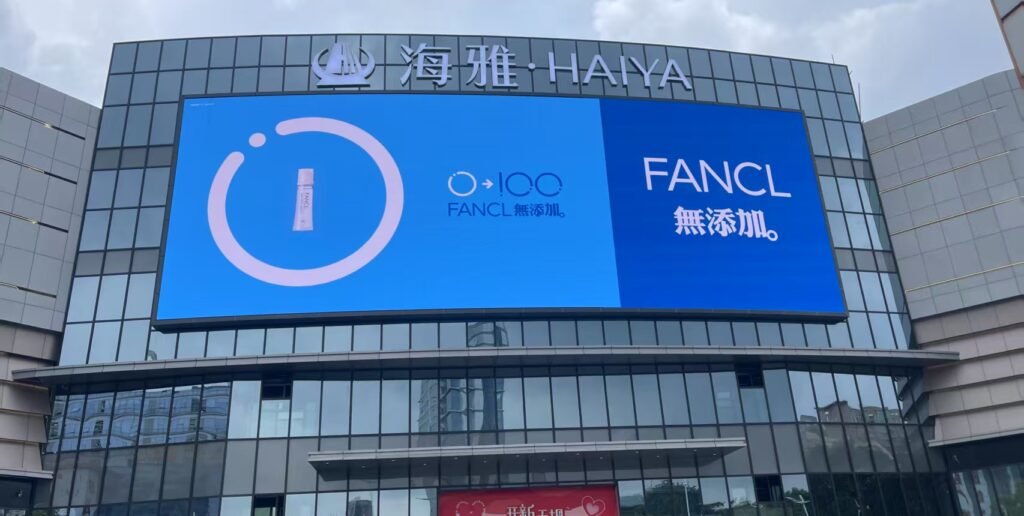
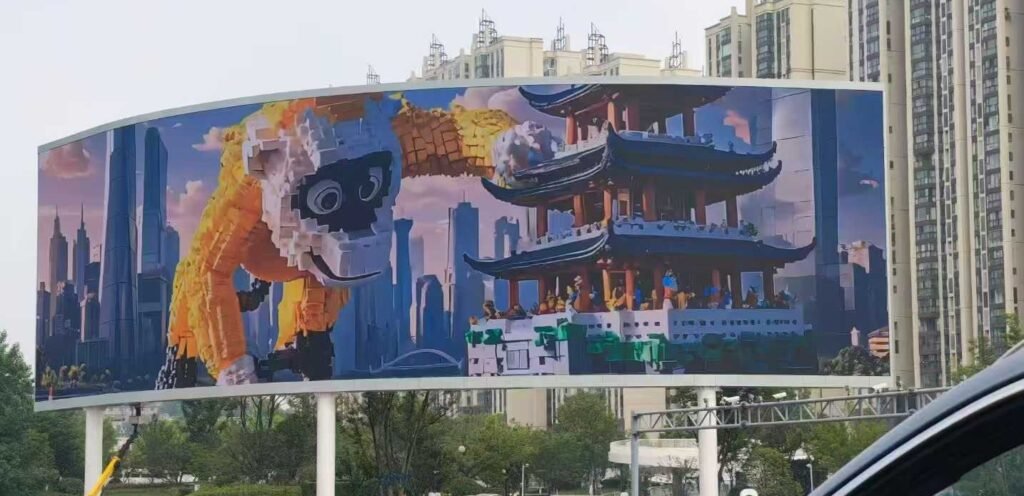
Outdoor LED billboards have displaced static printed signage in high-traffic advertising zones, offering dynamic content capabilities and 24/7 visibility. Unlike indoor displays, these installations must withstand environmental extremes—UV exposure, temperature cycles, wind loads, and precipitation—while maintaining optical performance in direct sunlight.
This technical guide provides billboard operators, structural engineers, and AV integrators with objective specifications for outdoor LED display procurement and installation.
Technical Advantages of LED Billboards Over Traditional Signage
LED technology provides quantifiable improvements for outdoor advertising:
1. Daylight Visibility
High-brightness LED arrays (5,000-8,000 nits) achieve contrast ratios of 10:1 even in 50,000 lux midday sunlight, whereas printed vinyl reflects at 500-800 nits with 2:1 contrast.
High-brightness LED arrays (5,000-8,000 nits) achieve contrast ratios of 10:1 even in 50,000 lux midday sunlight, whereas printed vinyl reflects at 500-800 nits with 2:1 contrast.
2. Operational Lifespan
Properly engineered LED billboards maintain >80% brightness after 50,000 hours (5.7 years of 24/7 operation), while vinyl fades 30-50% within 12 months of UV exposure.
Properly engineered LED billboards maintain >80% brightness after 50,000 hours (5.7 years of 24/7 operation), while vinyl fades 30-50% within 12 months of UV exposure.
3. Remote Content Management
Networked control systems enable real-time ad rotation, fault monitoring, and brightness adjustment without physical site visits, reducing operational labor by 70%.
Networked control systems enable real-time ad rotation, fault monitoring, and brightness adjustment without physical site visits, reducing operational labor by 70%.
Pixel Pitch Engineering for Roadside Viewing
P4 – Urban Arterial Roads (Viewing Distance 15-30m)
Optical Specifications:
- Minimum Viewing Distance: 4 meters (for detail recognition)
- Optimal Viewing Zone: 15-50 meters
- Resolution: 250×250 pixels per 1000×1000mm panel
Technical Applications:
- City center billboards viewed by pedestrians and slow-moving traffic
- Shopping district entrances
- Transit station perimeters
Engineering Note: At 30km/h traffic speed, drivers have 3.6 seconds to read content; P4 provides 12-15 characters legibility at 20 meters.
P6 – Highway Adjacent (Viewing Distance 30-80m)
Optical Specifications:
- Minimum Viewing Distance: 6 meters
- Optimal Viewing Zone: 30-100 meters
- Resolution: 166×166 pixels per 1000×1000mm panel
Technical Applications:
- Highway off-ramp advertisements
- Urban expressway roadside installations
- Large-format building facades
Engineering Note: Highway code typically requires minimum 100m clear sightline; P6 ensures 6-meter-high text is legible at 80m distance.
P8 – Major Highway Overview (Viewing Distance 50-150m)
Optical Specifications:
- Minimum Viewing Distance: 8 meters
- Optimal Viewing Zone: 50-200 meters
- Resolution: 125×125 pixels per 1000×1000mm panel
Technical Applications:
- Interstate highway billboards
- Airport approach corridors
- Stadium perimeter advertising
Engineering Note: At 100km/h traffic speed, viewing time is 5.4 seconds for 150m zone; P8 provides optimal character height (1 meter) for brand recognition.
P10 – Long-Range Landmark Billboards (Viewing Distance 100m+)
Optical Specifications:
- Minimum Viewing Distance: 10 meters
- Optimal Viewing Zone: 100-300+ meters
- Resolution: 100×100 pixels per 1000×1000mm panel
Technical Applications:
- Skyscraper roof installations
- Mountain-side digital signage
- Waterfront metropolitan displays
Engineering Note: P10 minimizes pixel count (reducing processor load) while maintaining visual integrity for long-range brand messaging.
Brightness Engineering for Daylight Visibility
Luminance Calculation Formula
Required LED Nits = (Ambient Lux × Desired Contrast Ratio) / (π × Transparency Factor)
Example Calculation:
- Ambient sunlight: 30,000 lux
- Desired contrast: 10:1
- Transparency factor: 1.0 (opaque billboard)
- Required Nits: (30,000 × 10) / (π × 1) ≈ 95,500 reflected nits
- LED Output Required: 95,500 × 0.08 (reflectance efficiency) = 4,760 nits minimum
Engineering Standard: Specify 5,500 nits for full-sun exposure, 4,500 nits for partial shade.
Auto-Dimming Specifications
Sensor Requirements:
- Type: Dual-sensor array (north-facing and south-facing cells)
- Response Time: <3 seconds for smooth sunrise/sunset transition
- Control Range: 10-100% in 256 steps
- Nighttime Setback: 300 nits maximum (reduces light pollution)
Power Savings:
Auto-dimming reduces average power consumption by 35-45% over 24-hour cycle.
Auto-dimming reduces average power consumption by 35-45% over 24-hour cycle.
Weatherproofing Engineering Standards
IP Rating Requirements by Installation Zone
Zone A (Direct Rain Exposure): IP65 minimum
Zone B (Partial Cover): IP54 acceptable with drip edge
Zone C (Coastal/Salt Air): IP66 with anti-corrosion coating
Zone B (Partial Cover): IP54 acceptable with drip edge
Zone C (Coastal/Salt Air): IP66 with anti-corrosion coating
Component-Level Protection:
- LED Modules: Silicone potting on PCB backside (2mm thickness)
- Connectors: IP67-rated with locking collars (True1 or equivalent)
- Power Supplies: Sealed aluminum housing with breather valve
- Data Receivers: Conformal coating on all components
UV Degradation Prevention
Material Specifications:
- LED Encapsulation: UV-resistant epoxy (ASTM G154 tested, 1,000 hours)
- Cabinet Coating: Polyester powder coat, 60-80 micron thickness with UV inhibitor
- Cable Jacket: Thermoplastic elastomer (TPE) rated for 5-year outdoor exposure
Testing Protocol: QUV accelerated weathering test per ASTM G154 must show <5% brightness loss after 2,000 hours.
Thermal Cycling Durability
Operating Range: -30°C to +60°C (verified via environmental chamber)
Thermal Shock Test: 20 cycles of -20°C to +50°C transition within 1 hour
Acceptance: No seal degradation, no solder joint cracking, <2% brightness variation.
Thermal Shock Test: 20 cycles of -20°C to +50°C transition within 1 hour
Acceptance: No seal degradation, no solder joint cracking, <2% brightness variation.
Structural Engineering for Billboard Mounting
Wind Load Calculation (ASCE 7-16)
Formula: Wind Pressure = 0.00256 × Kz × Kzt × Kd × V² × I
Where:
Where:
- Kz: Exposure coefficient (0.85 for 30ft height, Category C)
- Kzt: Topographic factor (1.0 for flat terrain)
- Kd: Directionality factor (0.85)
- V: Basic wind speed (mph) — 90 mph for most US locations
- I: Importance factor (1.0 for billboards)
Example:
Wind Pressure = 0.00256 × 0.85 × 1.0 × 0.85 × 90² × 1.0 = 15.0 psf (718 Pa)
Wind Pressure = 0.00256 × 0.85 × 1.0 × 0.85 × 90² × 1.0 = 15.0 psf (718 Pa)
Force on 48m² Billboard:
F = 718 Pa × 48m² = 34,464 N (3,515 kgf)
F = 718 Pa × 48m² = 34,464 N (3,515 kgf)
Mounting Structure Design
Option 1: Monopole Steel Structure
- Material: Q345 steel pipe, 600mm diameter, 10mm wall thickness
- Foundation: 3m×3m×3m concrete block with anchor bolts
- Height: 12-15m typical (clears roadway sightlines)
- Safety Factor: 3.0 for overturning moment
- Advantage: Minimal ground footprint, suitable for roadside installations
Option 2: Building-Mounted Steel Frame
- Material: 80×80×4mm steel tube grid, welded on-site
- Attachment: Chemical anchors into concrete wall (M16×150mm, 200mm spacing)
- Stand-off: 500mm from building face (service access gap)
- Advantage: Leverages existing structure, no foundation work
- Limitation: Requires structural engineer verification of wall capacity
Option 3: Roof-Mounted Platform
- Material: Galvanized steel I-beam frame (IPE 200)
- Ballast: Concrete blocks (2,000kg minimum) for non-penetrating roofs
- Wind Restraint: Guy wires to roof structural columns
- Advantage: No ground space required; optimal for urban rooftops
Foundation Requirements
Soil Bearing Capacity:
- Minimum 150 kN/m² for monopole installations
- Geotechnical survey required for billboards >30m²
- Settlement Limit: <25mm differential settlement to prevent screen misalignment
Concrete Specifications:
- Grade: C30 minimum (4,350 psi)
- Rebar: #5 (16mm) Grade 60, 200mm grid spacing
- Anchor Bolts: Grade 8.8, M24×600mm, torqued to 450 N·m
Power System Engineering
Electrical Load Calculations
Billboard Power Formula:
Total Watts = Area (m²) × Brightness (nits) × 0.08 (efficiency factor)
Total Watts = Area (m²) × Brightness (nits) × 0.08 (efficiency factor)
Example:
48m² P8 billboard at 5,500 nits:
48 × 5,500 × 0.08 = 21,120 watts peak
48m² P8 billboard at 5,500 nits:
48 × 5,500 × 0.08 = 21,120 watts peak
Average Power (with dimming): 21,120 × 0.65 = 13,728 watts
Service Requirements
Voltage Drop Constraint:
Maximum 3% drop from service panel to billboard
Cable Sizing: Use voltage drop calculator:
Maximum 3% drop from service panel to billboard
Cable Sizing: Use voltage drop calculator:
- Distance 50m: 25mm² copper conductor (4 AWG)
- Distance 100m: 50mm² copper conductor (1/0 AWG)
Transformer Sizing:
- Peak Load: 21,120W ÷ 208V = 101.5A
- Transformer: 30kVA minimum (provides 144A @ 208V)
Surge Protection:
- Type 1 SPD: At main service panel, 100kA per phase
- Type 2 SPD: At billboard disconnect, 40kA per phase
- Ground Resistance: <5 ohms (verified with fall-of-potential test)
Backup Power Considerations
Battery Backup for Critical Functions:
- Capacity: 2,000Wh for 4 hours of 300-nit nighttime operation
- Type: Lithium iron phosphate (LiFePO4), -20°C to +60°C operating range
- Application: Maintains emergency messaging during power outages; extends ad revenue hours
Signal and Control Systems
Long-Distance Signal Transmission
Distance >100m: Fiber optic required
- Type: Single-mode fiber, LC connectors
- Converter: HDMI-to-fiber transmitter/receiver pair
- Latency: <1ms (negligible for video sync)
Distance 50-100m: HDBaseT copper
- Type: CAT6A shielded cable
- Bandwidth: 18Gbps (supports 4K@60Hz)
- Power: Can deliver 100W PoH (Power over HDBaseT) to receiver
Network Redundancy:
Dual-path fiber rings recommended for billboards >$50,000 value. Automatic failover switches to backup path in <50ms.
Dual-path fiber rings recommended for billboards >$50,000 value. Automatic failover switches to backup path in <50ms.
Content Management Specifications
CMS Requirements:
- Uptime: 99.5% availability (scheduled maintenance windows)
- Bandwidth: 10Mbps per billboard for real-time content updates
- Security: AES-256 encryption for content in transit, WPA3 for wireless backup
- Failover: Local SSD storage holds 7 days of scheduled content
Proof-of-Play Reporting:
- Granularity: Log each ad play with timestamp, duration, brightness level
- Storage: 90 days local, 2 years cloud archive
- Accuracy: ±1 second (required for advertiser billing)
Common Technical Mistakes in Billboard Installation
Mistake 1: Undersized Brightness Specification
Error: Installing 3,000 nit panels for south-facing billboard
Result: Content invisible during 10am-4pm peak traffic hours
Solution: Always specify 5,000+ nits for sun-exposed orientations; conduct site lux survey before procurement
Result: Content invisible during 10am-4pm peak traffic hours
Solution: Always specify 5,000+ nits for sun-exposed orientations; conduct site lux survey before procurement
Mistake 2: Inadequate Wind Load Calculation
Error: Using standard building code for freestanding billboard
Result: Structure failure in 80km/h winds
Solution: Apply ASCE 7-16 Section 29 for sign structures; hire structural engineer for billboards >20m²
Result: Structure failure in 80km/h winds
Solution: Apply ASCE 7-16 Section 29 for sign structures; hire structural engineer for billboards >20m²
Mistake 3: Cable Voltage Drop Negligence
Error: 100m run with 6mm² cable for 20kW load
Result: 8% voltage drop, color shift, premature power supply failure
Solution: Calculate voltage drop at design stage; upsize cables one gauge as standard practice
Result: 8% voltage drop, color shift, premature power supply failure
Solution: Calculate voltage drop at design stage; upsize cables one gauge as standard practice
Mistake 4: Neglected Grounding System
Error: Single ground rod, no bonding to structure
Result: Lightning strike damage, $30,000+ equipment loss
Solution: Bond all metal components; install Type 1 SPD; verify <5 ohm ground resistance
Result: Lightning strike damage, $30,000+ equipment loss
Solution: Bond all metal components; install Type 1 SPD; verify <5 ohm ground resistance
Mistake 5: Processor Underspecification
Error: Using consumer-grade media player for 4K billboard
Result: Stuttering playback, crashes during ad transitions
Solution: Specify industrial player with 8GB RAM, SSD storage, quad-core CPU;verify 24/7 duty cycle rating
Result: Stuttering playback, crashes during ad transitions
Solution: Specify industrial player with 8GB RAM, SSD storage, quad-core CPU;verify 24/7 duty cycle rating
Product Selection Framework by Billboard Scale
Small Billboard (10-20m²)
Recommended Product: P4,5,000 nits,monopole structure
Technical Rationale:
Technical Rationale:
- 4mm pitch provides legibility at 15-30m viewing (urban roads)
- 5,000 nits sufficient for morning/evening direct sun
- Monopole minimizes ground footprint for roadside installations
Medium Billboard (30-60m²)
Recommended Product: P6,5,500 nits,building-mounted frame
Technical Rationale:
Technical Rationale:
- 6mm pitch optimal for 30-80m highway viewing
- Building mount leverages existing structure,avoids foundation costs
- Frame design allows service access without crane rental
Large Billboard (100m²+)
Recommended Product: P8/P10 hybrid,6,000 nits,custom steel structure
Technical Rationale:
Technical Rationale:
- P8 for lower section (detail zone),P10 for upper section (skyline visibility)
- 6,000 nits compensates for viewing angle light loss at height
- Custom structure engineered for wind loads at 15-30m elevation
Product Quality Assessment Protocols
Brightness Uniformity Test
Method:
- Display full-screen white at 100% brightness
- Measure 25 points using calibrated luminance meter
- Acceptance: ≥93% uniformity (≤7% variation) per panel
- Field Verification: <5% variation panel-to-panel
IP Certification Verification
Method:
- Request IP test report from accredited lab (not self-declaration)
- Test Evidence: Pressure and duration documented (e.g.,12.5L/min for 3 min for IP65)
- Acceptance: Report less than 24 months old,same product series number
Thermal Stress Test
Method:
- Operate panel at max brightness in environmental chamber
- Cycle temperature:-20°C to +60°C,10 cycles
- Acceptance: No solder joint cracks (X-ray inspection),<5% brightness loss
Wind Load Structural Test
Method:
- Apply 150% of calculated wind pressure to structure
- Acceptance: <L/360 deflection,no permanent deformation
- Certification: Engineer-stamped drawings required for permits
Pre-Installation Technical Checklist (30 Days)
Structural & Site:
☐ Geotechnical survey completed (for monopole foundations)
☐ Building structure assessed by engineer (for wall mounts)
☐ Wind load calculations stamped by licensed structural engineer
☐ Foundation design approved by local building department
☐ Crane access verified for panel installation (if applicable)
☐ Geotechnical survey completed (for monopole foundations)
☐ Building structure assessed by engineer (for wall mounts)
☐ Wind load calculations stamped by licensed structural engineer
☐ Foundation design approved by local building department
☐ Crane access verified for panel installation (if applicable)
Electrical:
☐ Service panel capacity verified:21kW min for 48m² billboard
☐ Transformer sizing calculated and ordered (8-12 week lead time)
☐ Cable routing mapped,trench depth confirmed (24″ minimum)
☐ Grounding system design:5 ohm max resistance
☐ Lightning protection:Type 1 SPD specified
☐ Service panel capacity verified:21kW min for 48m² billboard
☐ Transformer sizing calculated and ordered (8-12 week lead time)
☐ Cable routing mapped,trench depth confirmed (24″ minimum)
☐ Grounding system design:5 ohm max resistance
☐ Lightning protection:Type 1 SPD specified
Product & Logistics:
☐ Panel count verified against order (+5% spares)
☐ Processor capacity confirmed:supports total pixel count +20%
☐ Spare power supplies ordered (1 per 10 panels minimum)
☐ Crane booking confirmed for delivery date
☐ Lift-safety plan approved (for roof/platform installations)
☐ Panel count verified against order (+5% spares)
☐ Processor capacity confirmed:supports total pixel count +20%
☐ Spare power supplies ordered (1 per 10 panels minimum)
☐ Crane booking confirmed for delivery date
☐ Lift-safety plan approved (for roof/platform installations)
Commissioning:
☐ Luminance uniformity test scheduled (post-installation)
☐ Color calibration probe calibrated (within 12 months)
☐ Network configuration documented:static IPs assigned
☐ Content schedule programmed and tested
☐ Proof-of-play reporting validated
☐ Luminance uniformity test scheduled (post-installation)
☐ Color calibration probe calibrated (within 12 months)
☐ Network configuration documented:static IPs assigned
☐ Content schedule programmed and tested
☐ Proof-of-play reporting validated